blogging, digital marketing, digital marketing services, internet marketing, social media marketing

Organic Search Engine Optimization: 10 Steps to #1 Google Rankings

Anyone with a website can greatly benefit from understanding organic search engine optimization. Also called organic SEO, organic search engine optimization is a process of optimizing your website copy and HTML in order to help your website rank higher on search engines like Google and Bing. This way potential customers can find you quickly and easily.

There are several measures you can take to help your website grow in search rankings. Most of them are fairly easy to do. But why take the time and effort to learn how to rank higher on search engines if you’re already using ads, social media, or email marketing?

With organic search engine optimization (as opposed to pay-per-click ads) people will more easily find your website on search engines while they are looking for a product or service you provide. Making it more likely that they will convert from visitor to customer. No one searches for a product or service that they don’t want, so they’re already in the mood to buy. You just have to stand out among the competition. Additionally, when you rank on the front page of a search engine, you are showing potential consumers the legitimacy of your products or services because of your high ranking.

Results don’t happen overnight – organic search engine optimization takes time, patience, and consistency. There is certainly no guarantee that you will be in the number one spot on a search engine results page, or SERP, but with this guide you will have a better understanding of how to grow your website in the rankings.

Let’s take a look at 10 steps you can take to make sure potential customers are finding your website through organic search engine optimization.

Steps for Organic Search Engine Optimization

1. Understand what customers want and why they might come to you.

This is important before delving into the world of organic search engine optimization. Figure out the types of words and phrases, called keywords, your consumers use when looking for your product or service on a search engine.

Save the terms you come up with in a list – this will be a great place to start when beginning your keyword research. It’ll be super helpful to go ahead and put your keywords into an Excel document or Google Sheet. This way, when you’re performing keyword research, you will be more organized.

What are the most popular services you offer? What need does your service fill? Consider a wide array of both similar and diverse terms to get you thinking about how people are using search engines. One way to get more ideas is to type in relevant phrases into Google and look at the related searches that drop down before you search.

organic search engine optimization

2. Perform thorough and diverse keyword research.

This step is extremely important and will help you figure out what words and phrases people are using to search for your products and services.

There are a few things to look for when researching keywords: monthly searches, keyword difficulty, and competition.

  • The monthly volume of searches entered on keywords can be found with a few different methods. If you have a Google Ads account, you can use Keyword Planner for this step. If you don’t, there are a few free sites out there that will give you similar numbers. Obviously, if a keyword has higher monthly searches you’ll want to keep it in mind. However, that also might mean that it has a higher keyword difficulty and fiercer competition.
  • Keyword difficulty is a number that lets you know how difficult it will be to rank for a certain keyword. The higher the number, the more difficult it will be to rank on that keyword. There are a few sites online that will tell you keyword difficulty of a word or phrase. Record these numbers in your Excel document or Google Sheet that you made earlier.
  • An ideal keyword has high monthly searches and a relatively low keyword difficulty. Once you find some keywords that make sense for your business, have a relatively high search volume and a relatively low keyword difficulty, it’s time to research the competition. However, you’ll first want to understand how local searches affect organic search engine optimization.

3. Understand the localized keyword searches.

An important thing to note is the effect that localized searches will have on search engines. For example, say you’re in Atlanta and you’re looking for a photographer for your wedding. When you search “wedding photography” it wouldn’t be helpful to see the results of photographers in Los Angeles. This is why Google takes into account where you are when you search for certain words and shows you listings from businesses that are close in proximity to you.

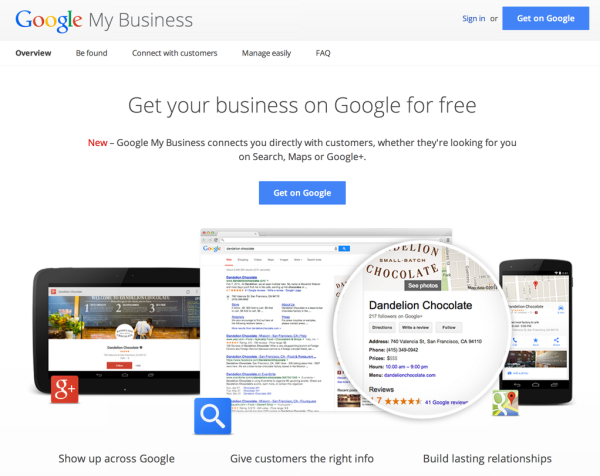
Many people also search specifically for services within their area. Utilizing keywords such as “wedding photography Atlanta” instead of just “wedding photography” can help you face local competition better. Setting up a Google My Business page is also a tool that will help your business pop up in localized searches. It’s free to set up and requires a physical address for your business.
organic search engine optimization

4. Research competition.

Search the keywords you’ve chosen and see what websites come up. Are they using the keyword in their website copy? How many times? This will give you a clue for how many times you’ll want to use that keyword in your website copy when you start implementing changes for organic search engine optimization.

One important thing to note is a website’s domain authority (DA) and page authority (PA). This is a number from 1 to 100 that indicates the strength of a website’s domain or a specific page. DA and PA are two of several factors that go into how a website will be ranked on a SERP. The higher the DA and PA, the better the chances are of that webpage ranking on the front page of a SERP (everyone’s dream!). This number is determined by a few things, such as the age of the website and number of links leading to it (backlinks).

While there isn’t much you can do about how long your website has been around, it’s important to note this factor if you ever want a new website for your business. It’s more beneficial to keep an old domain and redesign the layout than it is to start from scratch. A page’s authority isn’t always the same as the whole domain’s authority, but they’re determined in the same way. New web pages on an old domain will still have the domain authority to back it up, but their page authority will start out at 1.

Popularity of a website or page can be increased by upping the number of links to your page, called backlinks. Links to your pages from authoritative sites indicates popularity and trustworthiness.

Find a website or browser extension that will tell you the domain authority of a URL. This way, you can accurately look at your competition and see if your domain authority can stack up to the competition, or if you need to start working on your links.


5. Implement keywords in your on-site copy.

So now you have picked your keywords with the above steps in mind. Now it’s time to figure out which pages of your website you want to optimize for higher search engine results.

The home page of your site is usually a good place to start. It typically holds a wide array of information about your product or service and will lead the website visitor to where they want to go. However, if you have other informative pages on your site that you think would be more helpful, you may want to choose one of those pages in addition to, or instead of, the home page.

Keep in mind the number of times your competition uses the keyword you’re going for on their pages. You can find this by a simple control/command + F search on their webpage. A good rule of thumb is to have each keyword you’re trying to rank for used in your website copy at least 5-7 times per page.


One practice to avoid is keyword stuffing. This is when you insert your keyword in places where it doesn’t make sense, just to have it in your copy as many times as possible. Try to write copy that makes it easier to insert your keyword rather than just trying to cram it as many times as you can into a paragraph.

6. Update your HTML.

organic search engine optimization

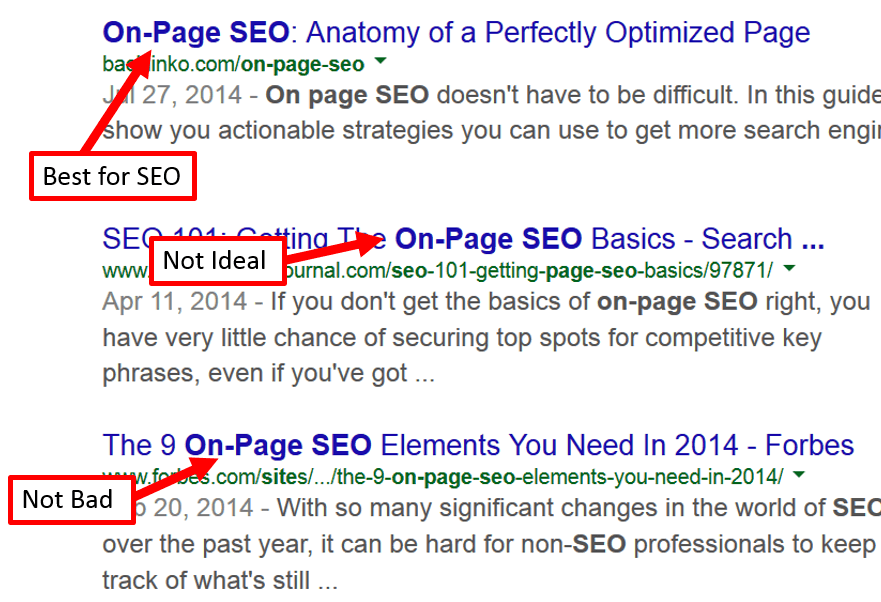
While you are updating your website’s copy, you’ll also want to implement changes in your HTML – specifically, in your H1 and H2 title tags, as well as your meta descriptions and URLs. You’ll want to put your most relevant keywords in these sections of your website HTML. Search engines take into account the words in these sections of your website’s HTML when listing out relevant webpages in a search result.

H1 and H2 title tags are names for the two most important types of titles in your website. H1 tags are your main titles – usually large or bolded on a website, and at the top – and H2 tags are secondary titles that clarify your main title, or might be the titles to different page sections. To utilize these sections effectively, you can use the format “Business | Keyword” as your H1 tag. For example, if my business name was “Emily’s Images” and my keyword was “Atlanta wedding photography,” my title would look like “Emily’s Images | Atlanta wedding photography”.

A meta description is a short blurb about the particular page of your website. This is a great place to insert keywords easily. However, you also want to include helpful information for potential site visitors to draw them into clicking on your website. This blurb will appear in search engine results pages under your H1 title tag and URL of your webpage.


Utilizing keywords in your URLs will also help with your rankings. Unfortunately, there isn’t much you can do to change the home page URL of your website without your domain authority being reset. However, each additional page you add is a place to insert a keyword, as long as it is relevant to the actual page content. We’ll go over blogging shortly, but URLs of blog posts are a great place to use your keywords.

7. Build your links.

Links are an important part of organic search engine optimization. Using the copy on your site to link to other relevant pages on and off your site will increase the number of links.

Inbound links are links that keep viewers on your website. You can link to your blog posts and other information pages or service pages, for example. Search engines use links to discover new pages, as well as to determine how a page should rank, so don’t skip over this process.

While inbound links are important, backlinks are just as important, but a little more difficult to acquire. We already went over how backlinks are important for building your domain authority, but the process to acquiring them can cost you hundreds. If you don’t have a budget for backlinks, try building relationships with other relevant quality websites that will link to your webpage.

The quality of your inbound and backlink anchor text is important to note as well. Anchor text is the text that is used to hyperlink to another website. The anchor text should relate to the content of the page. Never use anchor text that just says “click here.”

Also, for outbound links, always link to relevant sites and topic from respected, credible websites. What does this mean? For instance, a link from a respected and well-established site such as BBC is better than a link from a friend’s personal blog. You see, relevant backlinks will be preferred by search engines, so should you.

8. Start blogging.

Writing blogs for your website not only helps with organic search engine optimization, but it provides valuable information for your potential customers and website visitors, among other things. Writing blogs about the industry you service will provide a place for you to insert your keywords plenty of times, while keeping the information relevant and helpful. On top of that, it makes your business look like an industry expert. A well-written blog makes you look more credible because of your level of expertise. Blogs that optimize for keywords will ideally be anywhere from 500 to 2,000 words, but not everyone has the time to crank out blogs that size every week. However, posting shorter blogs still provides value to your client base and potential customers.

In addition to keywords, be sure to include several inbound links in your blog posts. Blogs are typically a great place to include links to your other blogs, your service pages, and more.

If you want to drive traffic to your website using blogs, but don’t have the time to commit to writing blogs, hiring a full service digital marketing agency to assist you with your content strategy is the way to go.

9. Track your rankings.

By now you’ve done your keyword research and you’ve optimized your website content to reflect the keywords you’re trying to rank for. Now you’re ready to sit back and watch your website rankings grow. How will you know if your efforts are successful?

Tracking your keyword rankings is the best way to tell if your work is being rewarded.

Additionally, knowing how your SEO is performing can help you make the necessary changes over time to keep your rankings high. Look around for a keyword tracking tool to help you track how your SEO is performing. It’s typical for your ranking to fluctuate from week to week and even day to day. Look for a general upward trend from month to month that shows that your efforts are successful.

10. Don’t go it alone.

Implementing organic search engine optimization is a lot for one person to take on. It’s especially difficult if you’re not familiar with things like keyword research, backlinks, and HTML. Taking the time to teach yourself about SEO can be rewarding, but hiring an SEO company helps you save your time and effort so you can do the things you’d rather be doing. Contact us today to schedule a time to talk about how we can improve your organic search engine optimization.

blogging, digital marketing, digital marketing services, internet marketing, social media marketing

6 Principles Of Email Marketing

Email is a web marketing tool that has the potential to succeed in an enormous number of individuals who have an interest in your products or services.And while it’s possibly one of the oldest methods of outreach, research continues to show that it can be very effective when it’s used properly.

seo company kochi


1. Make a Specific Offer

In a piece of writing on Marketing Experiments, there’s an excellent quote that basically sums up our goal with every email, which is:“Specificity converts. In marketing, there should be no such thing as a general message. The marketer communicates with an aim. This aim should dictate everything else we say. This aim should influence, even constrain, every word we are saying .”
If your email is simply a generic reminder that you simply exist, likelihood is that it’ll be 100% successful… at reminding folks that you exist… and also that you simply wish to send them useless emails.


2.Make a selected Offer within the Right thanks to the proper Audience


A real estate marketing campaign, for instance , will need to consider both buyers and sellers. It should be ready to provide information at the proper time about the proper neighborhoods and houses within the right places. Weekly emails would likely be overkill and would have a far better chance of annoying, instead of enticing, potential customers.On the opposite hand, if you’re running an email campaign for an ecommerce store, you’ll want to up the amount of emails because your customers will want to possess the information on the simplest deals or new projects.


3.Communicate Like You Would on Social Media


When you treat your emails sort of a flier that gets shoved into every mailbox on the road , the owners of said mailboxes are getting to treat them the same… and throw them away.We do tend to consider email as advertisements and announcements, and while that’s not exactly a nasty thing, it isn’t the foremost effective thanks to reach bent your customers.


4.Don’t Expect to Always Get It Right the First Time


Don’t expect perfection from your very first email. You can do rather well together with your first email – assuming you’ve started your campaign on the proper foot – but it’s getting to take some work, some tests, and a few re-working to actually grab all the potential here.Email marketing is like every other element of online marketing, meaning you would like to believe analytics instead of assumptions.You may be surprised what the numbers show you.For example, you’ll have seen some numbers before that are all about “the best time to send emails” or the “best days of the week to send emails” or “how repeatedly a months you ought to send emails.”


5.Make the Value Very Clear


From the subject line to the content and images, you need to make sure you’re connecting the value you offer to the reader.In the SEO world, we often talk about how you only have a few seconds to capture your customers attention once they land on your home page.With email, the same urgency applies, but in a different way.When someone arrives on your website, it’s safe to assume that they a minimum of had some quite interest in your products/services/content because they actively looked for and clicked on your site.


6.Don’t invite Much, But Be Clear What You’re posing for


An email with a call to action within the range of “subscribe now for $10 a month” isn’t likely to urge much traction.Don’t attempt to sell anything together with your email except a click.That means selling them on the worth on the opposite side of that click.If you’ve connected with them, and spoken to them as a true person, this shouldn’t be too hard to do.At the same time, you don’t really need to beat around the bush. You can be clear about the very fact that you simply are selling something.People tend to be more hospitable directness. If they feel that you’re trying to be sneaky about the sale, they’ll probably just hit that delete button.

Are you looking for best digital marketing services ,Please Visit Our Site seo company kochi

blogging, digital marketing, digital marketing services

Rules of Creating SEO Friendly Content

Having a professional business website that conveys a robust message can convince be excellent leads or sales generating tool. However, the key here is to convey the right message, one that helps you connect to your target audience at a higher level. Which is why investing in good SEO friendly content is important.

The purpose of making quality content isn’t just to make your business site look good. You want the right people to read what you are writing. And that means your content also needs to rank higher in the search engine result pages. Because it’s a proven way to reach out a bigger section of your target audience.

Since people are regularly searching for topics relevant to your business (regardless of the industry you are in), you don’t just need content, you need content that impresses both — the readers and the search engines. In short, you need in-depth, SEO friendly content that ranks in the top ten search results.

SEO friendly content length

Creating quality content is important when it involves creating a top-quality impression on your readers. But without focusing on the SEO aspect of it, you’re missing out on the chances to getting your content in front of the right people.

Keep in mind that good content goes hand in hand with ethical SEO, so it’s something that every business (no matter how small) needs to work on.

Is producing SEO friendly content hard? Of course not. If you’re already creating content, you just need to take it a notch up in the right direction if you want to reap the benefits of SEO.

Once you begin working on producing great, SEO friendly content, it not only gets easier to achieve higher search engine rankings, but also gets simpler to stay your position in the search engine result pages.

So the question is, how do you really go about creating SEO friendly content that actually gets real-world results? What do you need to ensure you’re doing better than your competitors in terms of producing content that is favored by Google and its users?

In the following article we’ll be looking into 5 essential rules that you can follow to make your content more SEO friendly, without breaking any of the white hat SEO rules.

 Rules on how to Create SEO Friendly Content

1: Take an Original Approach

Creating SEO friendly content in itself doesn’t have to be a daunting task. But the moment you try to copy others it becomes difficult. When you focus on being authentic and different in your own way, without focusing too much on your competitors, you have a much better chance of creating new content that really matters.

Standing out of the crowd gets a lot more achievable when your content is authentic and original. Now, this doesn’t mean that you cannot seek inspiration from sources within your industry. You always can learn from others before offering your own unique insight.

So if that’s the case, why are more than half of the brands out there failing when it comes to creating authentic content? The answer may not be so simple.

resonating content

When you’re focusing on creating real, SEO friendly content, forget rehashing what has already been overly done. Being original is what really matters and that can only happen when you bring out the originality in the concepts or ideas that you share. Avoid taking the lazy route with your content. Instead, make it a piece worth consuming and sharing. Make it a breath of fresh air.

One of the key aspects to improving search engine optimization results to get other reputable websites within your niche to link to yours. When you put in real effort to make your content original, you automatically open doors for building more backlinks. Because quality websites like to link to helpful resources that offer something new and authentic.

If you look at the stats, 90% of consumers find custom content (read: unique) helpful and almost 80% believe in a company that is working on strengthening its relationship with them.

Also, looking at it purely from Google’s point of view, you will get rewarded by the big G for publishing original content in terms of higher ranking. And get penalized for any content that is blatantly copied from somewhere else.

You can make your content more original and SEO friendly…

A) Tapping Into Your Reader’s Emotions

A simple yet proven way to make the content original that helps you connect with your target audience is to focus on touching their emotions.

In fact, it has been found that a marketing message becomes 2X more effective when it impresses the reader’s emotions and gives them a reason to share. Whether your content is humorous or controversial, if it can stir the right emotions, it has a higher chance of standing out in the crowd.


Here are three ways you can evoke the emotions of your readers and boost the chances of gaining traction/engagement from each piece of content you produce.

  1. Use the right kind of vocabulary that has a positive and uplifting effect on readers. The idea is to make them feel more confident, inspired and even intelligent with your words.
  2. Inspire your readers to take action by sharing your content with others. Use storytelling as a tool to create inspirational content that is worth sharing with others. For instance, you can share one of your customer’s success story and make your content both, authentic and inspiring, ultimately making it more SEO friendly.
  3. Keep your readers interested by surprising them with unexpected twists and turns, without losing focus on the main topic.

B) Adding Your Own Perspective

There is a sea of content on the Internet, so what will make people choose your piece of content over your competitors? It’s because of the value you bring and how you add your own twist/angle to the content. Your unique perspective can make your content notable and SEO friendly.

One of the best ways to do this is to share your own experience with what you’re discussing. Do you have a personal story or anecdote that can shed light on the topic? Do you have a unique solution to share for a common problem?

Sharing a personal story with your readers adds an air of authenticity to your content and also humanizes it. It helps bring about a positive change in each reader. It makes your content marketing efforts truly pay off.

good stories

2: Choose the Right Keywords

Selecting the right keyword can be seen as one of the most crucial steps towards creating quality SEO friendly content. The idea is to choose a keyword that’s worth targeting and weave it into an strong piece of content so you’re able to rank for it above your competitors. However, when not executed correctly, your keyword usage can backfire. Which is why it requires careful consideration.

Your target keyword could range from a two-word keyword to a five-word phrase that represents your article’s main topic. Even though your article will end up ranking for multiple keyword phrases, it’s worth targeting a specific keyword that conveys your topic vividly. This is usually the keyword that you want your article to rank high for.

Here are the steps that you can take to choose and use the most appropriate keywords for your content.

  1. Consider Your Main TopicThe foundation of any kind of keyword research is to know your topic inside out. You need to get into the specifics of the topic you are targeting and understand what it has to offer to the readers. What kind of solution does it provide?
  2. Brainstorm Your List of Preferred Keywords

    There are a number of keyword research tools out there, but the one that you need to start with is your own mind. Put yourself into the searcher’s shoes and ask yourself, what search query would you use if you were searching for your target topic?

    Make a list of all the keyword phrases that come to your mind. Here’s an example.
    SEO friendly keyword research

  3. Start Your Keyword Research Process

    Once you have your list of keywords, log on to the Google Keyword Planner tool to begin your research. Since this tool is free and effective, it can give you the head start you need.keyword plannerOpen the Google Keyword Planner tool and enter your choice of keyword phrase (from your list) into the “Word or Phrase” box. This should give you the global monthly search volume for the keyword phrases you searched for, along with the data for related phrases. Try to only look for keyword phrases that are “natural language” because it’ll be easy to include them in your headlines and content.
  4. Avoid High Search Volume Keywords

    It can be tempting to choose keywords that have a high global search volume. But it’s a good idea to avoid these phrases because given their popularity, they’ll be hard to rank for

keyword search volumeIt’s better to hit the page one for a keyword that gets a 1,000 monthly searches than a keyword with a much higher search volume where you have no chance of beating the competitors.
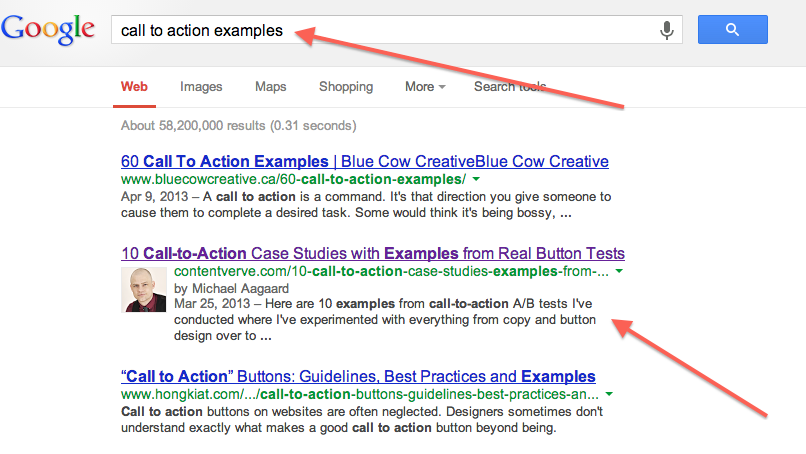
There is no hard and fast rule when it comes to choosing keywords based on search volume. What you really need to focus on is going for keyword phrases that are highly relevant to your topic and then see if it would be worth targeting them. Only spend time on keyword phrases that you can realistically rank for.

    1. Go for Long Tail Keyword Phrases

      Time and again, it has been proven that some of the best performing keywords in terms of quality do not have a high search volume.

      These long tail keyword phrases are more specific when compared to their shorter counterparts. But they are totally worth targeting because searchers using them are more sure of what they want. They’re simply focused, and in many cases, are in the “buying mode”.
      long tail keywordsPeople that use short and broad keyword phrases have a vague idea of what they want. They’re researching and learning, which means their chances of them “converting” are low.However, when someone use a longer keywords (many times in the form of a question), they are much likely to take action. Which could be anything from sharing your article, joining your email list or simply hitting the buy button.

      3: Effectively Optimize Your Titles

      When people hit Google to search something, they are often faced with a number of options on first page. A quick glance through the top ten results, they decide on visiting the websites with the most enticing headlines.

      That’s right, the headline or the title of your page is the first thing a search user will notice. If it entices them, they click through and visit the site. If not, they move on. You want to be the site they visit, not ignore.

      Creating SEO friendly content is not just about puand the information you share. No, it’s also about creating a great title for your page that gives people a reason to visit your site.

      SEO friendly page titles

      There are two things that you can do right away to make your headline worth clicking:

      1. Brainstorm Variations: Coming up with a great headline can be difficult if you’re trying to get it right in the first attempt. Rarely do you find a worthy title that way. Instead, what you need to do is brainstorm with your colleagues or partners a number of headline variations for the page.

      Your aim is to find the one that truly resonates with your target audience. It’s not uncommon to go through 20 or even 30 headline variations before you find the best one.

      keyword variations
      2. Use Keywords Naturally: Using your focus keyword in your headline, especially in the beginning of it, is great for SEO. However, the last thing you want to do is sound forced. Try to weave in your keyword in the headline in a way that gives meaning to it, instead of making it sound robotic.

      best SEO keyword placement

      You can couple up your focus keyword with power words – big, best, improve, etc. to make it look  more natural and attractive. Keep it short (less than 60 characters) and see to it that is is zero redundancy. Your title should pack a punch and also make sense at the same time.

      4: Aim for Better Content Readability

      Content readability is nothing but how easy it is to understand a certain written text. When creating SEO friendly content, it’s important to not miss out on the readability factor. While you are busy optimizing your content for the right keywords, its readability may go for a toss, which is a strict no-no.

      Even though content readability isn’t seen as a direct Google ranking factor, it is definitely an indirect one and can affect your SEO initiative.

      It’s also important to note that there are many different algorithms specifically created to understand how readable a piece of content is, which the search engines may use. A popular and effective content readability calculating algorithm is the Flesch-Kincaid readability score.

      SEO friendly readability

      1. Use Simple Vocabulary

      One of the easiest ways to enhance your content readability score and make it SEO friendly is to use simple words that your readers can connect with. Say goodbye to any type of jargon where you have to use long, complex words. simple vocabulary
      Use shorter words that add meaning to your content but don’t confuse the readers. Give them the information they want in the easiest to understand manner. Period.

      1. Make Your Sentences Short

      Longer sentences are not only hard and confusing to understand, but they’re also difficult to write while making sense. Make your sentences shorter wherever you can. Break down a long sentence into several shorter, easy-to-digest sentences. No wonder famous writer Ernest Hemingway was a fan of shorter sentences.words per sentence

      1. Write Like You Talk

      When it comes to creating easy to understand, SEO friendly content, your tone matters a lot. If you can write in a conversational tone, you’ll automatically make your overall content simple and to the point. write like you talk

      Even though this isn’t a rule that’s etched in stone, it does help to make your content more reader friendly. Also, writing like you are talking to a friend is much easier and more natural.

      1. Format Properly

      Shorter paragraphs make a lot more sense when you are writing for the web where people do not like big blocks of text. When it comes to proper formatting, using more and more white space will only make your content appealing and more SEO friendly.How often should you separate your sentences into paragraphs? The answer is whenever you can.

      Also, break down your text using subheadings along with bullet points and tables. The idea is to present your content in a more readable or digestible manner. Remember, content that is easy on the eyes gets read and spread.

      SEO friendly formatting

      1. Proofreading is the key

      No matter how great, how informational or how well- researched your article may be, if the content is full of misspelled words and grammatical errors, no one would surely read it. All the elements above will be pointless if you will not be able to proofread your post.

      So if you have an editor, be sure to let them check the article first before publishing. But if you don’t have one, then there are several online tools that can help you with this task such as the Hemingway Editor and Grammarly.

      5. Add Relevant Images

      Good content readability and a good choice of images, both go hand in hand. Because images basically help you add excitement to “only text” which can look boring and monotonous. Try to use relevant images wherever you feel applicable in your content in order to segment it better.

      While it is encouraged that you add an image to your content as often as you can, research says that the best image to text ratio is one image for every hundred words.

      SEO friendly image use

      Don’t add images to your content just for the sake of adding them. Your readers should be able to derive some value out of them. The more relevant an image is to the content, the better your audience will be able to connect to it.

      5: Focus on Improving User Experience

      User experience or UX is one of the key factors when it comes to the success of a website. Which is why UX focused marketing is important. And it is not limited to the overall website design. It goes beyond that and extends to how you use content on your site and the way it impacts its experience.

      Creating content that just fills up space on your website won’t take you far. Every piece of content that you create should start with your target user in the forefront. Keep your readers in your mind, even when your trying to improve your site’s SEO.

      Can you write content or even research keywords without understanding or knowing your target audience? Of course not. Because that’s a recipe to failure.

      Before you start on your “content creation” tasks, ask yourself…

      • What do my readers want from me? What is the expectation of my audience?
      • How can I create content that adds to the website’s overall user experience and improves it?
      • Does my website’s core values help my content marketing strategy or hurts it?

      The closer you take a look at your website and the kind of content you’re publishing, the easier it will be for you to serve your target audience. And Google knows this, which is why you’ll find websites that offer a stellar user experience are almost always rewarded by the search engine giant.

      Here’s what your information architecture should be like…

      So in order to increase the chances of making your content SEO friendly, see to it that you…

      1. Keep Users in the Forefront

        If you want to create SEO friendly that works, you need to think users first. Your content strategy should be designed around the user, not the other way round. Users, along with context and content should make up your site’s core information architecture. So, next time, don’t start off by thinking what you would want to cover in your blog post or eBook. Instead, focus on what type of ideas or solutions your users want or need from a business like yours. Produce true SEO friendly content that gives your readers value in every possible way.

      2. Grab their Attention Early On

        In order to catch the attention of your readers and keep it that way, don’t create content without having a central theme for it. Every piece of SEO friendly content has a certain theme that it is written around.

        Why? Because you want readers to know what to expect right from the start. You want them to have clarity. Even if your content has the best and the most relevant information, it’ll fail to give results if it doesn’t deliver in the first few moments.

      Wrapping Up

      As you can probably tell by now SEO and content marketing are pretty much a two in one type venture. If you’re going to perfect one, you should probably perfect the other as well or your time won’t be very well spent. They complement each other and don’t work as well without the help of each other.

      Therefor, it’s a must that your content be SEO friendly.

      And the best way to make sure that’s happening if you don’t have a dedicated staff member is to hire a full service digital marketing agency. Luckily we can help! Set up a free consultation today with one of our team members to see how we can take your SEO and content marketing efforts to the next level.