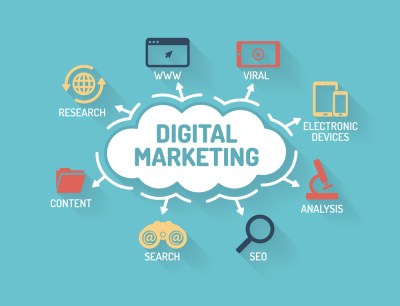
digital marketing, digital marketing services, internet marketing, social media marketing

AI In digital marketing and its uses

Today, optimizing for search is optimizing your customer’s experience. As people query a search engine on their laptop, ask a voice assistant for help, or use their mobile device to find nearby solutions to their needs, brands must be positioned to appear in these critical decision-making moments.

Moreover, they must be positioned to respond with relevant, personalized content that speaks directly to the stated need—regardless of device or platform. In fact, real-time marketing (65%) and omnichannel delivery and engagement (52%) were identified as the top two near-term marketing priorities in an Econsultancy/Resulticks survey of more than 340 enterprise brands.

This massive influx of search and customer interaction data cannot possibly be analyzed and activated in real-time without automation. But make no mistake, automation is no longer about having machines simply perform redundant tasks for us. The power of artificial intelligence has given our SEO and marketers the power to analyze information, make decisions, and even carry out optimization tasks, freeing up time for SEOs to focus on the more creative and strategic elements of each campaign.

How can you use AI in your SEO strategy to gain greater insight, respond in real-time, and increase your relevance to the ask?

Gleaning customer insights from search data

Artificial intelligence can enable SEOs to quickly reap the most impactful insights from otherwise insurmountable datasets. As search data has become increasingly complex, it’s become a rich source of insight with value across the organization:

  • Search queries can tell us what the customer needs, how they feel about it, what problem or pain point has led them to search, and more.
  • Zero-click – behavior on search results pages (SERPs) and interactions with local listings can tell us when customers quickly found their answer and converted to a phone call or in-store visit.
  • On-site activity can tell us what stage of their buying journey a customer is in, what information gaps still exist, what topics they want to learn more about, what reservations they may have about completing the transaction, and more.
  • Demographics – high-level trends, traits, and characteristics can add depth and color to buyer profiles.
  • Transactions – purchase history, interactions with in-store beacons, offers redeemed, and third-party profiles from credit cards, for example, help fill in the gaps and build a more robust understanding of the customer.
  • Social media, email, and other ongoing conversations can help us understand specifically what messaging resonates, which offers or content trigger a conversion reaction, and more.

ai in digital marketing


SEO holds the key to the bulk of this data that is used not only for informing marketing campaigns and targeting but for improving the product, customer service, and loyalty. Customer data has the power to transform the entire business, which puts SEOs in a pretty enviable position—if they can share and communicate these insights with the parties who can benefit from them.

Your CEO doesn’t want to see ranking reports; they want high-level insights that can inform the direction of the company. Front-line customer service teams don’t need to get into the weeds of an SEO audit, but they do need to understand what specific pain points and friction in the customer journey exist so they can more proactively address those.

AI-powered insights ensure reporting with speed and precision. Technology can be trained to recognize patterns in data and even dig into many layers of data, pinpointing opportunities and challenges you would never have uncovered otherwise. And marketers are not only seeing success stories in SEO: more than 31% of respondents in a BrightEdge survey found that AI helped provide a better understanding of the customer. (Disclaimer: I’m the COO at BrightEdge).

Using AI-based automation to improve SEO performance

This is really the power of the AI layer in SEO. We’ve long used automation to save time and reduce labor, but AI-based automation can improve SEO’s performance, too.

AI-powered paid media bidding was perhaps one of the best-known early uses of AI in marketing. Knowing this, SEOs can work closely with paid media teams to ensure good exposure while eliminating cannibalization, duplicated efforts, and wasted spend.

That same underlying AI technology can now power real-time content optimization and personalization, as well. SEOs have the ability to automate repetitive tasks such as link building and auditing. But you can also program your AI-powered SEO tools to trigger optimizations based on consumer behavior, interactions with content, specific search queries, and more.

Conversational bots, for example, can “learn” and improve their accuracy as they “get to know” your audience. Personalization engines can detect patterns and structure in your traffic and begin to predict which product or content recommendations may perform the best. And as those interactions take place, they continue to analyze, learn, adjust and perfect.

What incorporating AI into your SEO strategy gives you is the benefit of scale, even if you’re a one-person operation. Think of AI as a silent partner—a data-obsessed, completely geeked-out partner who never sleeps, is always on, and does the analytical work of a team of hundreds.

AI isn’t out for your job; it will free up your time and mental energy to focus on your more creative, strategic SEO opportunities. It will support you as you make the pitch for more SEO budget, present multi-channel recommendations to your CMO, and in some automated cases do a lot of the heavy lifting for you so you can focus on creative and digital strategy.

To know more about digital strategies and services contact our Digital marketing company Kochi 

blogging, digital marketing, digital marketing services, social media marketing

Tips in Using Facebook Ads for Ecommerce

As the largest social media network, Facebook is an excellent platform for ads. Properly targeted Facebook ads for e-commerce can be very helpful for any shopping business.

If you’re not running Facebook ads now, the probabilities are good that you’re missing on a lot of opportunities to make money.

To help you out, we have listed some of the most effective tips that you can use when coming up with strategies for running Facebook ads.

Proven Tips in Using Facebook Ads for Ecommerce

With over a billion users, using Facebook ads for e-commerce is a literal goldmine for businesses. And with such a huge number of users, the reality is that almost everyone is using it to their advantage. So why not join in and reap the same benefits yourself? Here are a few ideas that might help boost your Facebook ad strategies.

TIP# 1: Utilize Multi-Product AdvertisementsFacebook Ads for eCommerce

As the name suggests, the multi-product ads will allow you to showcase several products at the same time on Facebook. Using this type of ad can be very helpful for several reasons:

  • This type of ad can help boost conversions as the more products that a potential customer can see, the likelier that the customer will click on an ad.
  • It can be used to showcase the various features of a product.
  • It gives more options to customers.

More importantly, there are indications that multi-product ads really work. This type of ad is actually more efficient when compared with other types. According to a study, companies experienced up to a 300% increase in their click-through-rates after they used multi-product ads.

Also, here are some more interesting figures from an Adobe study:

  • The CTR(Click Through Rate) increased from 50% up to 300% of brands who used multi-product ads.
  • The CPC(Cost Per Click) decreased by up to 35% because of higher engagement.
  • It resulted to more efficient CPA(Cost Per Acquisition).

However, not all companies that use Facebook ads of this sort will experience that rate of increase in their CTR, as there are still other factors that should be considered but the number is still significant and should be food for thought for any business owner. And it is a great way to start how you can exploit the opportunities offered by Facebook ads for e-commerce.

Tip #2: Run Retargeting CampaignsFacebook Retargeting Ads

If you have been running your e-commerce business for some time now, then you know that most potential customers end up leaving their cart without completing their purchase. To be exact, 72% of internet buyers find yourself abandoning carts.

You don’t need to be a rocket scientist to see that it’s a pretty huge number!

Interestingly, only 8% of those who ended up abandoning their carts will come back. That’s a major missed opportunity because those customers have expressed their interest already about the product being sold. Think of the possibilities if you could just get them all back. Or at least most of them.

So, what do you do in order to get them back? This leads us to our second tip on this list of using Facebook ads for e-commerce. You should run a retargeting campaign. By using retargeting campaigns you have a chance of getting over 25% of those customers to come back. That might not be as huge a number as that of those abandoning the carts but it is still a significant one.

It makes sense for you to use retargeting campaigns. If you spend time and money on new people to convince them to buy your product, then it should be worth it to work on those who are already interested in what you are selling. They might not be as hard to convince when you think about it.

You can run retargeting campaigns together with coupons, discounts, and other enticing offers.


Tip #3: Make Sure You Use Conversion Tracking Pixelecommerce facebook adsIf you’re not aware of what a Conversion Tracking Pixel is and what it can do, then you’re missing out on a great deal.  A Conversion Tracking Pixel is a code that is used for tracking the behavior of those who visit your site.

It allows you to track the number of conversions you receive from your advertising campaign.

Conversion Tracking Pixels can also be used by Facebook in order to improve campaigns and target the right audience for your ads. In other words, another fantastic way to use Facebook ads for e-commerce purposes.

When you place Conversion Tracking Pixels on the checkout page, you will be able to get data regarding the actions taken by customers after clicking your ads. That way, you can measure your ROI more accurately.

But this step should be taken way ahead before you actually run your campaign. By doing so, you will give Facebook enough time to learn more about the people who are converting. Sort of giving them a heads up just so they will know about those who will convert ahead of time.

Tip #4: Use Video Advertisements Whenever Possiblefacebook for ecommerceIf you are planning on other ways of using Facebook ads for eCommerce, you should know that Facebook prioritizes video content. That means your ads would have more chances of ending up in the feed of the right people if you use video. That should be a light bulb moment that points you in a new but successfully familiar direction.

Also, videos are a lot more engaging in general. They are not as dull as other media types. Someone would be more likely to stop and watch a video than to just look at pictures of products. Stats show that most Facebook users end up watching videos on the platform daily.

The way that videos on Facebook have been set up is that they play instantly once a user scrolls over them. That catches the attention of users. And that’s what you want, to catch and then hold their attention. That’s the perfect way to use Facebook ads for e-commerce if you ask us.

Of course, you would have to make sure that you create your video ads correctly. Using these types of ads will not automatically mean better ROI for you.

Your videos should be formatted correctly. They should showcase your products in action or show the best features. Also, this is our chance to be creative with how you come up with the video.

Tip #5: Offer a Discount

discount offer

This is actually a must-do step regardless of the type of platform you are using for your ads. But it is also extremely effective as one of the ways to use Facebook ads for e-commerce.  People love discounts and someone who is not actively looking for the product you are selling might end up purchasing it just because of a discount offer.

You can create advertisements that highlight the discount offer specifically. If you have a new product, for example, you can create an introductory discount offer to your customers.

You just have to make sure that the discount that you are promising your customers will not be disadvantageous to your business in the long run. The last thing you want is to undermine your own business in exchange for some short term success.

By using the Offers feature on Facebook ads, you can minimize the gap which exists between the discount offer and the actual sale where you can lose customers. They don’t even have to leave Facebook in order to take advantage of your offer.

Once a customer clicks on the ad for the offer, they will get a code that they can use. Now, another advantage of this method is that you can show the number of people who have taken advantage of the offer.

This so-called social proof is a great way of convincing people that they should grab your offer. If others are enjoying the benefits of the offer, then why shouldn’t they? That’s the mindset that you would like potential customers to have.

Tip #6: Boost a Past Post

Boost Posts for eCommerce

It is understandable if you are hesitant when it comes to creating a new advertising campaign. There is just no way for you to be sure whether it’s going to be successful. While doing business involves taking risks, it can be scary. So if you want to be a little more wary or careful than usual, then no one is going to blame you.

That’s why it makes sense to just boost an existing post. Yes, even this can be a way to use Facebook ads for e-commerce successfully. You can use this feature in order to boost an advertisement that has already proven its effectiveness in the past and get it out there again. By doing so, you can minimize the risks that you are running.

Using this feature, you can choose to promote to those who have already liked your page or to a new audience. Both options have advantages and disadvantages.

The great thing about this ad feature is that you are almost guaranteed to get results through it. After all, the past post already has a track record of success.

Tip #7: Use Posts That Are Not About Selling

Your goal with your e-commerce business is to sell your products but not all your ads should be about selling. Does that sound like a contradiction? How can this be included in a list of using Facebook ads for e-commerce, then? There’s actually a good reason for it.

People tend to stay away from obvious advertisements because they get so much of it online. It can often be overwhelming. So, sometimes you may just have to post something creative and informational without trying to convince people about buying your product to make them aware of your brand.

If you’re not going to sell on your ads, then what can you promote there?

One thing that you can post about is an event related to your business, brand, or product. You can get creative about the nature of the event that you will be promoting.

Just make sure that the event has a real connection with the nature of your business.

If you’re selling clothes, then maybe you can host a fashion show. If you’re selling skateboarding accessories, then you could create a skateboarding competition. Creativity is the name of the game here and you should have fun figuring out the best way to sell without seeming to.

Tip #8: Improve Your Brand Identity

Incorporate your branding into your social content as much as possible to improve your brand identity.

But what exactly is a brand identity and why is it so important?

It’s how your brand, business, and products will be known and perceived by customers. Once you have built, a solid identity for your brand, people will instantly recognize it.

You must be careful when considering what identity to create as it can backfire. If you do not have a graphic designer on staff, strongly consider hiring a graphic design agency.

Use posts to show the audience what your brand is all about. It helps if you have some sort of advocacy that you can identify with. That will make it easier for people to somehow have a connection with your brand without it seeming forced.

Not a Guarantee But a Big Boost

These are just eight tips that you can follow when using Facebook Ads for e-commerce and to help give your business a boost. Using these tips will improve your chances of getting more sales and improving your ROI.

Just because an initial attempt is not successful, it does not mean that you should give up on Facebook as a platform for promoting your business. It might take several attempts to find the right formula. That’s why it’s important that you consider all of the tips and ideas that we listed here.

Remember, Facebook is the largest online platform in the world where you can connect with your market and audience. It is worth your time and money to invest in it.

For the best Social media marketing services contact DMC Online’s Social media marketing team

blogging, digital marketing, digital marketing services

Rules of Creating SEO Friendly Content

Having a professional business website that conveys a robust message can convince be excellent leads or sales generating tool. However, the key here is to convey the right message, one that helps you connect to your target audience at a higher level. Which is why investing in good SEO friendly content is important.

The purpose of making quality content isn’t just to make your business site look good. You want the right people to read what you are writing. And that means your content also needs to rank higher in the search engine result pages. Because it’s a proven way to reach out a bigger section of your target audience.

Since people are regularly searching for topics relevant to your business (regardless of the industry you are in), you don’t just need content, you need content that impresses both — the readers and the search engines. In short, you need in-depth, SEO friendly content that ranks in the top ten search results.

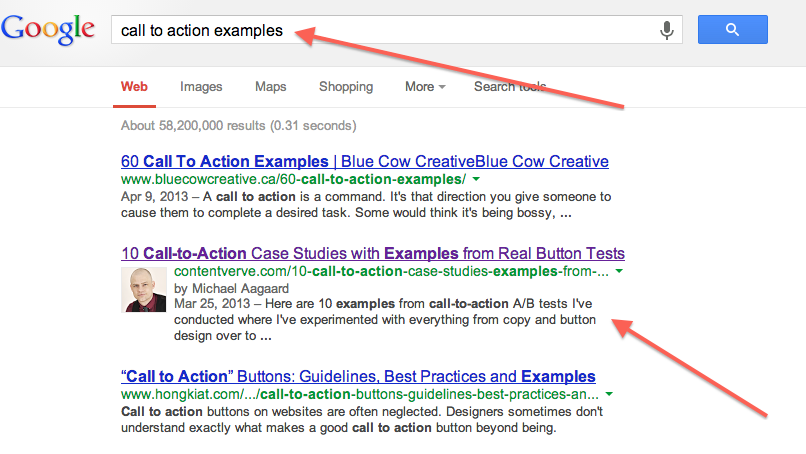
SEO friendly content length

Creating quality content is important when it involves creating a top-quality impression on your readers. But without focusing on the SEO aspect of it, you’re missing out on the chances to getting your content in front of the right people.

Keep in mind that good content goes hand in hand with ethical SEO, so it’s something that every business (no matter how small) needs to work on.

Is producing SEO friendly content hard? Of course not. If you’re already creating content, you just need to take it a notch up in the right direction if you want to reap the benefits of SEO.

Once you begin working on producing great, SEO friendly content, it not only gets easier to achieve higher search engine rankings, but also gets simpler to stay your position in the search engine result pages.

So the question is, how do you really go about creating SEO friendly content that actually gets real-world results? What do you need to ensure you’re doing better than your competitors in terms of producing content that is favored by Google and its users?

In the following article we’ll be looking into 5 essential rules that you can follow to make your content more SEO friendly, without breaking any of the white hat SEO rules.

 Rules on how to Create SEO Friendly Content

1: Take an Original Approach

Creating SEO friendly content in itself doesn’t have to be a daunting task. But the moment you try to copy others it becomes difficult. When you focus on being authentic and different in your own way, without focusing too much on your competitors, you have a much better chance of creating new content that really matters.

Standing out of the crowd gets a lot more achievable when your content is authentic and original. Now, this doesn’t mean that you cannot seek inspiration from sources within your industry. You always can learn from others before offering your own unique insight.

So if that’s the case, why are more than half of the brands out there failing when it comes to creating authentic content? The answer may not be so simple.

resonating content

When you’re focusing on creating real, SEO friendly content, forget rehashing what has already been overly done. Being original is what really matters and that can only happen when you bring out the originality in the concepts or ideas that you share. Avoid taking the lazy route with your content. Instead, make it a piece worth consuming and sharing. Make it a breath of fresh air.

One of the key aspects to improving search engine optimization results to get other reputable websites within your niche to link to yours. When you put in real effort to make your content original, you automatically open doors for building more backlinks. Because quality websites like to link to helpful resources that offer something new and authentic.

If you look at the stats, 90% of consumers find custom content (read: unique) helpful and almost 80% believe in a company that is working on strengthening its relationship with them.

Also, looking at it purely from Google’s point of view, you will get rewarded by the big G for publishing original content in terms of higher ranking. And get penalized for any content that is blatantly copied from somewhere else.

You can make your content more original and SEO friendly…

A) Tapping Into Your Reader’s Emotions

A simple yet proven way to make the content original that helps you connect with your target audience is to focus on touching their emotions.

In fact, it has been found that a marketing message becomes 2X more effective when it impresses the reader’s emotions and gives them a reason to share. Whether your content is humorous or controversial, if it can stir the right emotions, it has a higher chance of standing out in the crowd.


Here are three ways you can evoke the emotions of your readers and boost the chances of gaining traction/engagement from each piece of content you produce.

  1. Use the right kind of vocabulary that has a positive and uplifting effect on readers. The idea is to make them feel more confident, inspired and even intelligent with your words.
  2. Inspire your readers to take action by sharing your content with others. Use storytelling as a tool to create inspirational content that is worth sharing with others. For instance, you can share one of your customer’s success story and make your content both, authentic and inspiring, ultimately making it more SEO friendly.
  3. Keep your readers interested by surprising them with unexpected twists and turns, without losing focus on the main topic.

B) Adding Your Own Perspective

There is a sea of content on the Internet, so what will make people choose your piece of content over your competitors? It’s because of the value you bring and how you add your own twist/angle to the content. Your unique perspective can make your content notable and SEO friendly.

One of the best ways to do this is to share your own experience with what you’re discussing. Do you have a personal story or anecdote that can shed light on the topic? Do you have a unique solution to share for a common problem?

Sharing a personal story with your readers adds an air of authenticity to your content and also humanizes it. It helps bring about a positive change in each reader. It makes your content marketing efforts truly pay off.

good stories

2: Choose the Right Keywords

Selecting the right keyword can be seen as one of the most crucial steps towards creating quality SEO friendly content. The idea is to choose a keyword that’s worth targeting and weave it into an strong piece of content so you’re able to rank for it above your competitors. However, when not executed correctly, your keyword usage can backfire. Which is why it requires careful consideration.

Your target keyword could range from a two-word keyword to a five-word phrase that represents your article’s main topic. Even though your article will end up ranking for multiple keyword phrases, it’s worth targeting a specific keyword that conveys your topic vividly. This is usually the keyword that you want your article to rank high for.

Here are the steps that you can take to choose and use the most appropriate keywords for your content.

  1. Consider Your Main TopicThe foundation of any kind of keyword research is to know your topic inside out. You need to get into the specifics of the topic you are targeting and understand what it has to offer to the readers. What kind of solution does it provide?
  2. Brainstorm Your List of Preferred Keywords

    There are a number of keyword research tools out there, but the one that you need to start with is your own mind. Put yourself into the searcher’s shoes and ask yourself, what search query would you use if you were searching for your target topic?

    Make a list of all the keyword phrases that come to your mind. Here’s an example.
    SEO friendly keyword research

  3. Start Your Keyword Research Process

    Once you have your list of keywords, log on to the Google Keyword Planner tool to begin your research. Since this tool is free and effective, it can give you the head start you need.keyword plannerOpen the Google Keyword Planner tool and enter your choice of keyword phrase (from your list) into the “Word or Phrase” box. This should give you the global monthly search volume for the keyword phrases you searched for, along with the data for related phrases. Try to only look for keyword phrases that are “natural language” because it’ll be easy to include them in your headlines and content.
  4. Avoid High Search Volume Keywords

    It can be tempting to choose keywords that have a high global search volume. But it’s a good idea to avoid these phrases because given their popularity, they’ll be hard to rank for

keyword search volumeIt’s better to hit the page one for a keyword that gets a 1,000 monthly searches than a keyword with a much higher search volume where you have no chance of beating the competitors.

There is no hard and fast rule when it comes to choosing keywords based on search volume. What you really need to focus on is going for keyword phrases that are highly relevant to your topic and then see if it would be worth targeting them. Only spend time on keyword phrases that you can realistically rank for.

    1. Go for Long Tail Keyword Phrases

      Time and again, it has been proven that some of the best performing keywords in terms of quality do not have a high search volume.

      These long tail keyword phrases are more specific when compared to their shorter counterparts. But they are totally worth targeting because searchers using them are more sure of what they want. They’re simply focused, and in many cases, are in the “buying mode”.
      long tail keywordsPeople that use short and broad keyword phrases have a vague idea of what they want. They’re researching and learning, which means their chances of them “converting” are low.However, when someone use a longer keywords (many times in the form of a question), they are much likely to take action. Which could be anything from sharing your article, joining your email list or simply hitting the buy button.

      3: Effectively Optimize Your Titles

      When people hit Google to search something, they are often faced with a number of options on first page. A quick glance through the top ten results, they decide on visiting the websites with the most enticing headlines.

      That’s right, the headline or the title of your page is the first thing a search user will notice. If it entices them, they click through and visit the site. If not, they move on. You want to be the site they visit, not ignore.

      Creating SEO friendly content is not just about puand the information you share. No, it’s also about creating a great title for your page that gives people a reason to visit your site.

      SEO friendly page titles

      There are two things that you can do right away to make your headline worth clicking:

      1. Brainstorm Variations: Coming up with a great headline can be difficult if you’re trying to get it right in the first attempt. Rarely do you find a worthy title that way. Instead, what you need to do is brainstorm with your colleagues or partners a number of headline variations for the page.

      Your aim is to find the one that truly resonates with your target audience. It’s not uncommon to go through 20 or even 30 headline variations before you find the best one.

      keyword variations
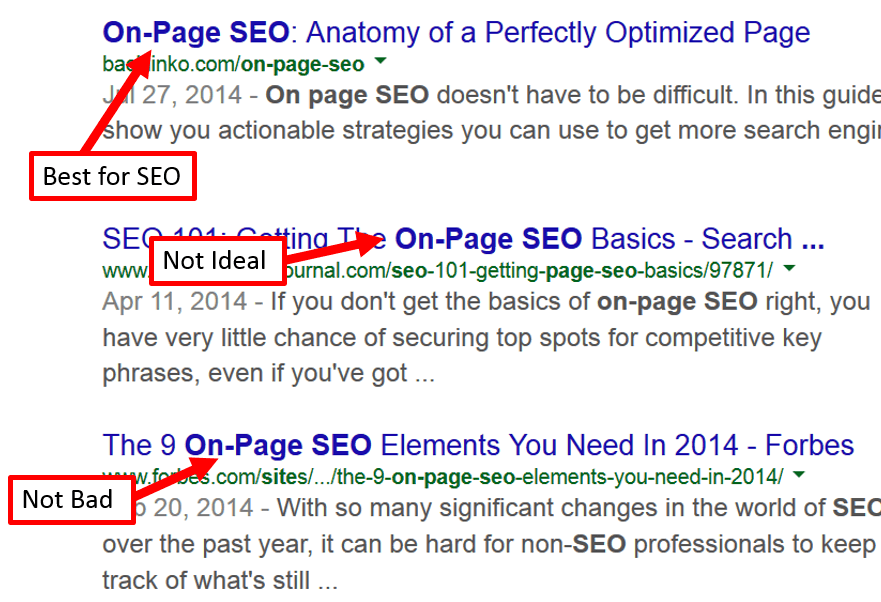
      2. Use Keywords Naturally: Using your focus keyword in your headline, especially in the beginning of it, is great for SEO. However, the last thing you want to do is sound forced. Try to weave in your keyword in the headline in a way that gives meaning to it, instead of making it sound robotic.

      best SEO keyword placement

      You can couple up your focus keyword with power words – big, best, improve, etc. to make it look  more natural and attractive. Keep it short (less than 60 characters) and see to it that is is zero redundancy. Your title should pack a punch and also make sense at the same time.

      4: Aim for Better Content Readability

      Content readability is nothing but how easy it is to understand a certain written text. When creating SEO friendly content, it’s important to not miss out on the readability factor. While you are busy optimizing your content for the right keywords, its readability may go for a toss, which is a strict no-no.

      Even though content readability isn’t seen as a direct Google ranking factor, it is definitely an indirect one and can affect your SEO initiative.

      It’s also important to note that there are many different algorithms specifically created to understand how readable a piece of content is, which the search engines may use. A popular and effective content readability calculating algorithm is the Flesch-Kincaid readability score.

      SEO friendly readability

      1. Use Simple Vocabulary

      One of the easiest ways to enhance your content readability score and make it SEO friendly is to use simple words that your readers can connect with. Say goodbye to any type of jargon where you have to use long, complex words. simple vocabulary
      Use shorter words that add meaning to your content but don’t confuse the readers. Give them the information they want in the easiest to understand manner. Period.

      1. Make Your Sentences Short

      Longer sentences are not only hard and confusing to understand, but they’re also difficult to write while making sense. Make your sentences shorter wherever you can. Break down a long sentence into several shorter, easy-to-digest sentences. No wonder famous writer Ernest Hemingway was a fan of shorter sentences.words per sentence

      1. Write Like You Talk

      When it comes to creating easy to understand, SEO friendly content, your tone matters a lot. If you can write in a conversational tone, you’ll automatically make your overall content simple and to the point. write like you talk

      Even though this isn’t a rule that’s etched in stone, it does help to make your content more reader friendly. Also, writing like you are talking to a friend is much easier and more natural.

      1. Format Properly

      Shorter paragraphs make a lot more sense when you are writing for the web where people do not like big blocks of text. When it comes to proper formatting, using more and more white space will only make your content appealing and more SEO friendly.How often should you separate your sentences into paragraphs? The answer is whenever you can.

      Also, break down your text using subheadings along with bullet points and tables. The idea is to present your content in a more readable or digestible manner. Remember, content that is easy on the eyes gets read and spread.

      SEO friendly formatting

      1. Proofreading is the key

      No matter how great, how informational or how well- researched your article may be, if the content is full of misspelled words and grammatical errors, no one would surely read it. All the elements above will be pointless if you will not be able to proofread your post.

      So if you have an editor, be sure to let them check the article first before publishing. But if you don’t have one, then there are several online tools that can help you with this task such as the Hemingway Editor and Grammarly.

      5. Add Relevant Images

      Good content readability and a good choice of images, both go hand in hand. Because images basically help you add excitement to “only text” which can look boring and monotonous. Try to use relevant images wherever you feel applicable in your content in order to segment it better.

      While it is encouraged that you add an image to your content as often as you can, research says that the best image to text ratio is one image for every hundred words.

      SEO friendly image use

      Don’t add images to your content just for the sake of adding them. Your readers should be able to derive some value out of them. The more relevant an image is to the content, the better your audience will be able to connect to it.

      5: Focus on Improving User Experience

      User experience or UX is one of the key factors when it comes to the success of a website. Which is why UX focused marketing is important. And it is not limited to the overall website design. It goes beyond that and extends to how you use content on your site and the way it impacts its experience.

      Creating content that just fills up space on your website won’t take you far. Every piece of content that you create should start with your target user in the forefront. Keep your readers in your mind, even when your trying to improve your site’s SEO.

      Can you write content or even research keywords without understanding or knowing your target audience? Of course not. Because that’s a recipe to failure.

      Before you start on your “content creation” tasks, ask yourself…

      • What do my readers want from me? What is the expectation of my audience?
      • How can I create content that adds to the website’s overall user experience and improves it?
      • Does my website’s core values help my content marketing strategy or hurts it?

      The closer you take a look at your website and the kind of content you’re publishing, the easier it will be for you to serve your target audience. And Google knows this, which is why you’ll find websites that offer a stellar user experience are almost always rewarded by the search engine giant.

      Here’s what your information architecture should be like…

      So in order to increase the chances of making your content SEO friendly, see to it that you…

      1. Keep Users in the Forefront

        If you want to create SEO friendly that works, you need to think users first. Your content strategy should be designed around the user, not the other way round. Users, along with context and content should make up your site’s core information architecture. So, next time, don’t start off by thinking what you would want to cover in your blog post or eBook. Instead, focus on what type of ideas or solutions your users want or need from a business like yours. Produce true SEO friendly content that gives your readers value in every possible way.

      2. Grab their Attention Early On

        In order to catch the attention of your readers and keep it that way, don’t create content without having a central theme for it. Every piece of SEO friendly content has a certain theme that it is written around.

        Why? Because you want readers to know what to expect right from the start. You want them to have clarity. Even if your content has the best and the most relevant information, it’ll fail to give results if it doesn’t deliver in the first few moments.

      Wrapping Up

      As you can probably tell by now SEO and content marketing are pretty much a two in one type venture. If you’re going to perfect one, you should probably perfect the other as well or your time won’t be very well spent. They complement each other and don’t work as well without the help of each other.

      Therefor, it’s a must that your content be SEO friendly.

      And the best way to make sure that’s happening if you don’t have a dedicated staff member is to hire a full service digital marketing agency. Luckily we can help! Set up a free consultation today with one of our team members to see how we can take your SEO and content marketing efforts to the next level.

blogging, digital marketing, digital marketing services, internet marketing, social media marketing

Why social commerce will rule social media in 2020

What’s coming to social media in 2020?

It can be hard to predict the future, especially for something as fast-changing as social media. But if you look to today’s trends and the latest buzz, you’ll start to see the signs.

Social commerce is one of the hottest trends in social media today, and it looks to have an even bigger impact in 2020.

Continue reading to find out the latest on what social commerce is, what it looks like, and how you can make the most of this buzzworthy new channel to further your brand and your business.

What is social commerce? 

Social commerce is selling products directly within social media platforms.

This is different than social media marketing, where you might try to drive referral traffic from social media to a website or online store. With social commerce, the store — the entire shopping experience — happens without the customer ever leaving the social media site.


How does social commerce work?

There are a ton of benefits to this, as you might imagine. It’s a far more streamlined process, especially when you can enjoy things like chatbot checkouts, and autofill payments and delivery details. There are fewer clicks and taps with social commerce than with traditional e-commerce through a web store.

The efficiency of the social commerce purchase journey far outdoes the typical e-commerce purchase. There’s a really great blog post on BigCommerce about this. Basically, the math goes like this:

  • If you have a traditional website and store, let’s say you get 10,000 visitors to the site.
  • Of that group, 25% give you their email address
  • When you send that group an email, 25% of them open it.
  • Then 5% of those who open the email click on the link in the email.
  • And three percent of those clicks end up buying something.

That’s a grand total of 1 purchase, after starting with 10,000 visitors.

Now, compare that to a hypothetical social commerce journey. Let’s take a messenger chatbot for instance.

  • Start with 10,000 chatbot visitors.
  • Of that group, you can message 99% of them
  • Open rates are quite high for chatbots, around 75%.
  • So from the group that sees your message and opens it, let’s say that 48% click-through
  • And then 1% purchase something.

That’s a total of 35 purchases, compared to the one (1) purchase in the website example.

Now, it obviously goes without saying that your mileage may vary here.

These are just example numbers. But hopefully, they highlight some of the advantages of the ease and efficiency of social commerce.

There’s also a strong case to be made on the qualitative side of things. Andrew Waber of Teikametrics, writing on Marketing Land, points out that there are really four separate stages of shopping experience. These are:

  1. Convenience
  2. Shopping as play
  3. Shopping as exploration
  4. Shopping as entertainment

What does social commerce look like on Instagram, Facebook, and Pinterest?

The primary players in social commerce are Instagram, Pinterest, and Facebook. We’ll touch on each of them quickly, starting with Instagram. 

Facebook data says that 70% of shoppers look to Instagram for product discovery. Perhaps because of this, Instagram’s roadmap has been taking on a decidedly strong shopping feel. The biggest development is Instagram Checkout, which is a fully contained shopping experience within the Instagram app. It’s currently only available to select brands like Nike and Kylie Cosmetics. With Instagram Checkout, you can see a product that you like in the Instagram feed and then complete the entire purchase without ever leaving Instagram.

This goes one step further than Instagram Shopping, another new feature that Instagram has come out with recently. Unlike Checkout, Instagram Shopping is available to businesses in over 70 countries so long as you sell physical goods and have an Instagram business account.
With Instagram Shopping, you can tag your images and stories with the products that are featured in your posts. Then your audience can tap to go straight to your store to make the purchase.

For Facebook, they’ve already taken some really huge strides toward social commerce with Facebook Page Shops and Messenger. First, let’s talk about Facebook Page Shops.

Businesses can create an entire store within Facebook, quite easily and smoothly. To get started, make sure your Facebook page has the Shopping template selected, then click the Shop tab on your Page, then click Go to Commerce Manager. Here is where you complete a few sign up steps and then upload your product catalog to your Facebook shop.

There’s a ton you can do from here, like:

  • Add new products and update product information
  • Sell directly from your page
  • Manage orders and shipping, and
  • Run Facebook ads to promote these products.

The website ConversionXL has a neat case study on a brand that has experimented with a Facebook Shop. The watch seller, MVMT, added a selection of products from its catalog to Facebook.

  • Within 90 days, approximately 60,000 users visited the store.
  • These visitors converted at a 0.5% conversion rate, resulting in more than $15,000 in revenue.

Pinterest also has some really powerful social commerce features for businesses, with new features coming out all the time. Buyable pins were released four years ago now, in 2015, and had over 60 million buyable pins in its first six months. We’ve seen more and more commerce features since. Most recently,

  • Shop the Look, which highlights the items in a photo that are available for purchase. And
  • Catalogs, which allow you to upload an entire product catalog to feature on Pinterest

How to get started with social commerce in 2020

1. Focus on your best, lowest-cost products

It makes sense that lowest-cost products might sell best on social media. You’re capturing people at a certain place in their buyer journey where they’re eager to buy, not eager to weigh the pros and cons of a major purchase.

That’s why we recommend using a strategic approach to what you list for sale on social media. If you start with your best products, you’re selling the items that appeal to the widest audience and have been proven to resonate with your fans. If you sell your least expensive ones, then you’re reducing friction for shoppers even more.

Along with this, it’s useful to know the larger themes with social commerce, too. According to an eMarketer report, the most relevant verticals for social commerce are categories like apparel, luxury goods, beauty, and home decor.

If you’re in doubt about what to sell, then start with an experimental mindset. You don’t need to put your entire catalog on social right away. Especially since social commerce is still gaining traction, not all your audience may be primed to purchase. A GlobalWebIndex study found that 21% of shoppers use social to make a purchase — a number that we’d expect to rise quite a bit in 2020.

2. Get the right tools at your disposal. 

There are a ton of great options out there, but we want to highlight just a couple to give you a taste of what’s possible. First, there’s a messaging tool called ManyChat, which allows you to combine Facebook Messenger and SMS campaigns. ManyChat, and other chat tools like it, can be great for collecting leads and converting them into buyers.

Similarly, another great social commerce tool is jumper.ai. This tool comes with pre-built automated checkout chatbots, which integrate with all sorts of different tools and platforms. You can integrate it straight into Instagram to create a social commerce experience.

And along with third-party tools, there are new social commerce features coming to social networks all the time. We think it’s really smart to continually try out these new features, both for their commercial potential and for the engagement boost you get from trying out new content on your accounts.

3. Partner with influencers and encourage your community to share your products.

These two groups — influencers and community — can be very powerful for your commerce efforts thanks to the way that networks like Instagram and Pinterest are set up. Many of their new features allow people to share your products on your behalf and still tie into the frictionless buying experience of a buyable Pin or Instagram shopping.

4. Measure your strategy

The ultimate goal of social commerce is to guide customers to checkout. And you can do this in any number of ways, through great content, two-way communication, and more. Ultimately, though, the best measurement of a social commerce strategy is in dollars and cents. How many sales did you make?

And at the same time, as we talked about above, not all your audience may be ready to shop just yet. Social commerce is still a trend in the making. Not everyone is on board.

So this opens up a variety of alternative measures for success. For instance,

  • How many emails you capture. These emails can become important for starting a relationship with your customers and helping guide them back to your social accounts or your e-commerce website.
  • You can also think about measurements like
  • Brand engagement, and
  • Completion of certain steps before the conversion

For your social needs contact Social Media Marketing in Kochi | DMC Online


blogging, digital marketing, digital marketing services, internet marketing, social media marketing

What is Digital Advertising and How it Work

Need a helping hand with your digital marketing efforts? Or maybe you only want proven, actionable marketing tools, tactics, and templates to implement in your business? Check out the newest deal from DMC Online, and you’ll get on your thanks to helping your business grow.

Welcome to the fun world of digital advertising, where everyone starts off asking an equivalent question:

What even is digital advertising?

If you’re not Steve Jobs and didn’t realize how important digital advertising was getting to be in building a corporation in 1984 (the year Apple’s iconic commercial launched), this is your OFFICIAL invite into the club.

Let’s be honest, none of us got the memo as quickly as Jobs did. Yet, we will all learn a valuable lesson from him.

Digital advertising can catapult a business, like Apple, into success and make raving fans from your customers (this is advice from a corporation that reached a $1 trillion valuation in 2018).

What is Digital Advertising?

Digital advertising may be a strategy that promotes a product online. This promotion happens on social media platforms, search engines, websites, or maybe in your inbox. Essentially, digital advertising is promoting your product or services to people on the web.

And (just to drive home the point) it’s a huge part of the marketing industry right now.

In 2018, Facebook made $55 billion in advertising revenue. That means that marketers paid them a cumulated sum of $55 billion to advertise their products on Facebook platforms.

Like we said, digital advertising is quite an enormous deal.

It also can be mentioned as “online advertising” or “paid media.” All of those terms just mean that you’re promoting a product online with the hope of starting conversions (i.e., users to sign up for your email list, people to buy your product, etc.).

How Does Digital Advertising Work?

When Apple ran its iconic ad in 1984, everything was pretty simple. While they had to wait until 2000 to be able to run a Google ad for their products, there wasn’t much competition trying to steal their customers online when they could finally launch online ads.

Which is that the total opposite of what digital advertising is today? Customers in 2020 have tons of options when it involves who they need to buy their products from, and this rise in options has made online advertising a bit more complex than it wont to be.

But, don’t worry. At DMC Online we’ve blog posts and courses which will teach you the foremost up-to-date information about paid media because it stands today. While this might seem overwhelming, it all starts to form sense the more you study it.

For example, digital advertising requires you to possess a traffic campaign and it all starts together with your customer.

To create a web advertising strategy that works, you’ve got to make the proper ad for your audience. It needs to be something that makes them stop scrolling and think, “Wow, that’s exactly what I need.” That ad is going to make your prospects convert—remember, this is marketing lingo for getting users to sign up for your email list, people to buy your product, etc.

And if this were 2000 again, you’ll stop there. But…digital advertising requires a bit more effort now.

Part of this strategy also involves building relationships with your audience by giving them free value and showing them that you’re the business they want to buy from. It also involves doing audits on your ads to seek out ways to enhance them and increase your conversions.

You’ve presumably spent the bulk of today watching different sorts of digital advertising (we’ll explain how within the next section). Let’s look at some examples!

(NOTE: Need a hand together with your digital marketing efforts? Or maybe you only want proven, actionable marketing tools, tactics, and templates to implement in your business? Check out the newest deal from DMC Online, and you’ll get on your thanks to helping your business grow.)

Examples of Digital Advertising

If you’ve spent anytime online today chances are that you’ve seen some form of advertising. That’s because it’s really…everywhere.

For example, Mazda is using Twitter to promote their new model, MazdaCX30 (as you can see by the “Promoted” text in the bottom left-hand corner):

A Mazda Twitter profile with the headline, "The first-ever #MazdaCX30. Engineered like nothing else, to feel like nothing before. #FeelAlive

Industrious HQ, a coworking space located in Los Angeles, is running paid media on Instagram (notice the Sponsored text under their name):

IndustriousHQ's Instagram ad with a photo of one of their modern offices with white walls and light wood accents with caption, "Like what you see? It could be your new office. Book a tour today.

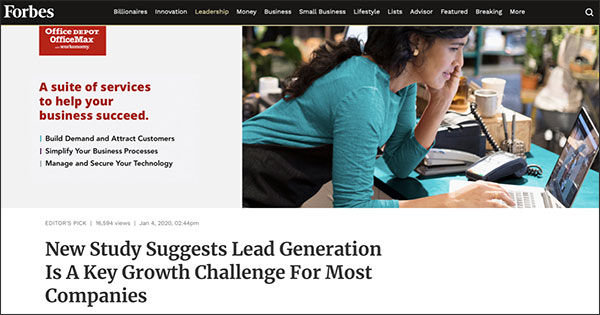
And even Office Depot is running ads on websites, like Forbes:

An ad for Office Depot in the above-the-fold content of Forbes with headline: A suite of services to help your business succeed

So, unless this article is that the first piece of Internet content that you simply have touched since you awakened this morning, likelihood is that you’ve spent tons of your time looking at digital advertisements—whether you realized it or not.

And that’s because business owners, agencies, and marketers are now on the train that Apple hopped on over 3 decades ago.

It’s is a huge market (obviously). Businesses around the world have figured out that with digital advertising’s ability to target specific audiences they can create more customers and double their business.

And that’s a really big deal.

(NOTE: Need a hand together with your digital marketing efforts? Or maybe you only want proven, actionable marketing tools, tactics, and templates to implement in your business? Check out the latest deal from DMC Online, and you’ll get on your thanks to helping your business grow.)

blogging, digital marketing, digital marketing services, internet marketing

SEO Trends You Want to Implement to Stay on Top in 2020

How SEO trends going to help your business?

Search Engine Optimization (SEO) is the set of best practices that will get your website to rank higher on a Search Engine Results Page (SERP) which results in more traffic to your company. These include technical aspects of your website as well as the quality of the content your produce.

Successful SEO sews the seeds for growth. It can lead to:

  • Higher rankings on a SERP
  • More organic traffic to your website
  • Increased conversion rate of customers
  • More Profit!

Don’t be fooled though. SEO is no simple key to overnight success. It will require time and effort over the long run to achieve results.

However, SEO will consistently and organically grow your business in the meantime. Even with domain age being a factor in your website’s authority, your authority will only be built by establishing credibility and providing value over the long run.

Google’s algorithm changes hundreds of times a year and isn’t always published explicitly. However, marketing experts have made it their focus to nail down what works and what doesn’t.

And Google has made their intentions clear.

Google’s algorithm favors valuable web pages that align with user’s needs most. Google favors:

  • High-quality content
  • Responsive and mobile-friendly web design
  • Fast load times
  • Content that seems natural and in-depth
  • Pages that have many other pages on the web pointing towards it (i.e. backlinks)

Every day they are trying to optimize how to deliver the best content to the user in the most intuitive ways while weeding out black hat tactics.

Staying on top of SEO trends and staying aware of the landscape will give you an edge in the market. That’s why we’ve compiled this list of SEO trends that will be crucial in 2020. If you are still unconvinced of how SEO can help your business grow.


SEO Trends You Want to Implement to Stay on Top in 2020

1. Local SEO

While this isn’t one of the newest SEO trends, the rising shift towards a mobile majority market will make local SEO exceptionally prevalent. Especially for businesses, being on the first page of a SERP, being in Google’s Local Pack, or being in geo-targeted ads will be vital for appreciable traffic.

¾  of people will not get past the first page of a SERP.

This means that if you are a company that relies on local business vs online, and have not put thought into local SEO – your competitors, unfortunately, have the lion’s share of the market.

local SEO dmc online

You’ve seen Google’s Local Pack before. By associating your business with a location and building credibility in your community, you can have a top 3 spot on Google’s high visibility spot.

You need to start out by claiming the business on Google. Nearly half business owners fail to try to to this meaning they slide under the radar for a majority of online engagement.

Other things you can do include:

Post your address (or even a map) on your website and replica that very same address across all social media accounts.
Include where your business operates and services on your website.
Target your location when choosing keywords for SEO and PPC. For example, if you sell furniture, you could target something like ‘furniture showroom Atlanta.’
Focus on off-page SEO. Social media, Google reviews, testimonials, backlinks.

2. Off-Page SEO

Off-page SEO is all the things you could be doing to boost your online rankings away from your site.

As a business owner, you are probably aware that one of the most effective drivers of business is Google reviews. The number and quality of reviews remain a leading conversion factor for those browsing the web. Especially those who will conduct business in person. Encouraging and incentivizing customers to go away reviews are going to be a regeneration loop for your business.

Another form of off-page SEO is maintaining social media accounts. Your accounts should move with frequent posts, engagement, and proper business information.

Having multiple social media profiles makes your business looks legitimate to Google. Especially once they point back to your website through calls to action.

One form of off-page SEO that can become the backbone for your SEO strategy is building backlinks. Backlinks are all the other links hosted by third parties on the internet that point towards your web pages.

Think about backlinks as a token of credibility in Google’s eyes. If influencers, websites, and internal navigation all point towards a certain page, it must be pretty important.

3. Long-Tail Keywords

If keyword research is your forte, then this isn’t news for you. However, the typical business owner is totally unaware of the importance of keyword research. And especially of how long-tail keywords could make or break their strategy.

Learn a touch bit more on keyword research here and the way it’ll help grow your business.

long tail keywords

Keyword research becomes the bread and butter of maintaining SEO. Long tail keywords are your best friend in this aspect. Think about what you would search.

If you were in the market for a specific truck and you were ready to buy, what would you search?

  • ‘trucks’
  • ‘used Dodge Ram in Atlanta’

The difference in specificity is pretty obvious. But incorporating long tail keywords hasn’t become the absolute mainstream yet.

Long tail keywords make up the majority of user searches, primarily because it is how people naturally type. Every short tail keyword has dozens of long tail cousins that could all benefit from different results pages.

‘Headphones’ could branch into:

  • ‘best headphones under $100’
  • ‘best noise cancelling headphones’

It’s all about knowing your niche and what your competitors are doing. Long tail keywords have the benefit of being both lower competition and have a higher conversion rate than short tail keywords.

People who are searching using long tail keywords are much further along in the sales funnel, They search with specificity because they are decisive and ready to convert. Capturing the long tail keywords most relevant to your business will result in the most leads and sales.

4. Mobile-First

Nearly half of all internet traffic is from mobile devices. And that figure is only rising. That being said, Google has decided to shift their algorithm towards mobile-first indexing. An approach that will rank websites that perform best on mobile devices better.

SEO trends

Websites that don’t adjust resolution per device, have low readability, low navigability, and slow page loading speeds won’t fare well with Google. To help you optimize your site, Google has provided us with this tool to check if your website accommodates mobile users.

If you would like to stay ahead of the curve, think about implementing:

  • Larger typography, bigger buttons, and streamlined menus.
  • Rich snippets. Formatted data that allows Google to prioritize your content in more content rich manner. You’ve probably seen them used most with recipes.
  • Accelerated Mobile Pages (AMP). Another way you can format your websites to be hyper-responsive and extremely streamlined for mobile devices. AMP pages are intuitive and much more responsive which translates to their higher rankings.
    So what’s the difference between websites that are AMP and Non-AMP formatted?AMP web pages strip-down elements that create a complex user experience. AMP simplifies your browsing. CSS is streamlined and you’re not even allowed to use Javascript. All of this aims to standardize your mobile responsive web pages since speed and readability are the priorities of AMP.
  • Pay for more bandwidth with your website host. Fast loading speeds really add to user experience and bring down your bounce rate.

Mobile first will be making its debut in 2019, and its probably going to change things by a little bit. People are already aware of how important performance is for SEO. So this is nothing new. But there is always room for improvement.

5. Keyword Trees

Gone are the times where spamming keywords in articles added to your page authority. Even before that, people were hiding keywords in the background as whited-out text.

Google’s algorithm is constantly getting smarter. Instead of simply crawling pages for a single keyword, it can now detect related keywords that are typically used in conjunction with the main slug. These are all the unique words that surround your niche and indicate your knowledge as an industry leader.

This means that Google is getting better at finding truly in-depth, rich content. What it also means is that your job is getting easier. Now you can focus on how to help the user rather than how to game the system.

6. Featured Snippets and Other Structured Data

Google has been killing it by coming up with ways to intuitively display search engine results. We’ve discussed rich snippets and Google’s local pack. But it doesn’t just stop there.

In fact, here are a few of the other ways Google displays results:

  • Knowledge graphs
  • Featured Snippets
  • People Also Ask Boxes
  • Google Image
  • Google News
  • Google Shopping
  • YouTube Video

Google has decided that it doesn’t make sense for every website to be displayed exactly the same. They have also made it so common searches find quick answers.

What this means for the business owner is that their content needs to be properly optimized. Knowing what Google offers, choose the formats that best support your content. And structure it so that it supports the rich snippets.

rich snippet dmc online

Being first on a SERP can make your business, but with the first result slowly being dominated by featured and stylized results, you have to stay ahead of the game.

Google also has other features that come along with rich snippets/structured data such as:

  • Calories
  • Star Rating
  • Store Hours

Take advantage of all that Google is offering. They are paving the way for what they think an optimal SERP should look like. And the best way to stay highly ranked is to incorporate their structure. Structured data will be one of the biggest SEO trends to watch out for because it will only develop more in the future.

7. Voice Search

SEO trends

With so many people using their phones in the car and on the go, voice search has become increasingly popular. Which is why it is on our SEO trends list.

Voice search is the indirect result of the mobile first landscape. And it simply represents a new way to interface data.

This ties into your SEO trends list in 2 ways.

With voice searches becoming nearly 1 in 5 searches, you can target that audience by guessing what kinds of things they are saying to make a search. These typically are stripped down, long-tail keyword searches.

Another way voice search is tying into your SEO strategy is the use of voice translate. Web pages that are programmed for voice translation have a better chance of being the first results on a SERP, simply by being the most helpful to a large division of users.

Make sure your page is the first option Siri, Cortana, Alexa, or Google provides to users!

You Heard it Here First

SEO is going to make or break your business. Staying on top of SEO trends is the first step towards improving your rankings. After all, nearly 40% of all ecommerce traffic comes from organic results pages. And for businesses that operate locally, this figure is only climbing.

We know SEO is a pain point for businesses of all size. And we know you likely have come here looking for help. We want to offer a helping hand so that you can be confident that your marketing budget isn’t being wasted. Don’t let SEO be the bottleneck for your content marketing strategy and your beautifully-designed website.

If you’d like to read more on fundamental SEO trends you competitors might not be on to, then read this on how to stay competitive in the SEO game. If implementation is your only concern or you would even like a free audit, then reach out to us.

We’d be happy to discuss where your business could improve and how your website could benefit from our SEO services. We consistently find ways to scrub websites and build pipelines for them to rank higher and receive more traffic! Let us help you reach that top spot on the Google search.


blogging, digital marketing, digital marketing services

Best Digital Marketing Company Kochi | DMC Online

Best Digital Marketing Company Kochi

The Best Digital Marketing Company Kochi, Kerala. DMC Digital Marketing Agency in Kerala offers SEO, Social Media Marketing and Video Marketing Services. Digital marketing is the new trend to explore your potential clients into your business. In this digital age, if your business is not moving forward with digital channels, then you are missing the opportunities to reach out to your customer.

dmc online

The trends in marketing are always changing. To meet these growing demands, digital marketing is an appropriate platform to achieve out to customers. Our proven ways of digital marketing methods will effectively popularize your business within the online population to help you to get new markets for your products and target the right audience. Digital marketing company Kochi is equipped with experts who can smartly drive-in traffic to your site and Gurus of social media marketing to form your name popular in the market.

We DMC Online one of the best digital marketing company in Kochi, Kerala. We aren’t simply a digital marketing company; we are also a well-equipped team of web designers and developers who offer excellent SEO services in Kochi.